
About Us: “Who We Are”

Blog, News

Since launching in 2015, JOVRNALISM™ has been consistently producing award-winning, immersive and innovative non-fiction projects that harness technology to tell compelling stories from our diverse communities.

Each semester this USC-based project works with media organizations and often with non-profits that serve communities that are often ignored by traditional media coverage or routinely presented in a negative light.

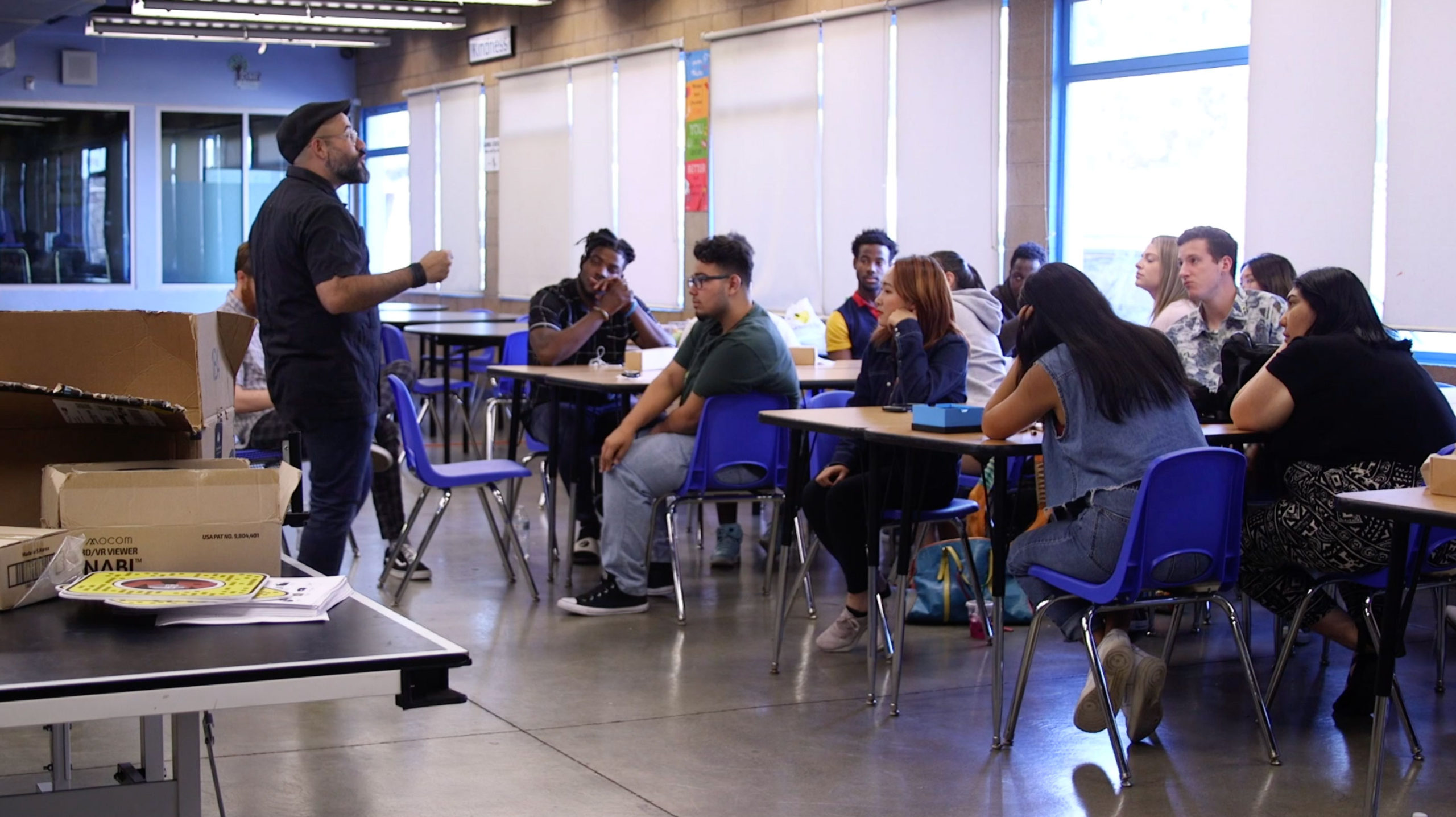
For the Fall 2019 semester, the JOURN489 class taught by JOVRNALISM™ founder Professor Robert Hernandez officially launched a series called Who We Are.

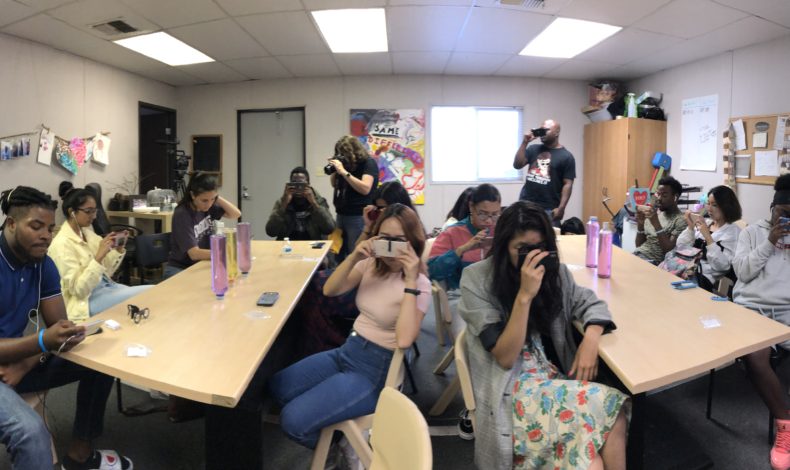
Building on its prior projects, the series will formally work with underserved and underrepresented communities, not to simply tell their stories, but to train and empower them to tell their own stories. We provide cameras and accessories – that they keep – as part of this training.

While emerging technology will lead to an inevitable disruption, we need to ensure diverse voices are actively shaping what stories should and will be told through these new media.

That is why every Fall semester Hernandez and his class will train communities to have them produce their own stories, as USC students learn alongside them.

This approach democratizes the new tech and elevates diverse voices.

The work produced isn’t some charity act. The final pieces have been recognized by both media and tech industries as prototypes of quality content, converting any new tech from fad to viable.

This semester we partnered with Peace4Kids, a non-profit focused on empowering foster care youth through media and content creation. They have been perfect partners with a mission that aligns with our goals.

The work this organization does is vital to these kids, teenagers and young adults – as well as the community around them.

Each piece presented in this project was envisioned by the Peace4Kid member and produced collaboratively with the JOVRNALISM students.

We could not be more proud of these pieces that offer a genuine inside into their lives.

This is a collaborative project that involves media partners like KCET/PBS SoCal and tech partners like Samsung XR (which donated the 360 cameras), Capture Reality (photogrammetry software) and SGO (360 video stitching software). Thank you to all our supports, especially the Heeger Funds, that financially support JOVRNALISM students.
Read More →

Making of ‘Finding Home’

Blog, News

Take a look behind the scenes at the making of this incredible collaboration between Peace4Kids and JOVRNALISM.

Video made by Mira Zimet

Read More →

Miriam: The Art of Healing

Our Stories

By Simrin Singh and Abigail Washer

Despite the hardships she endured, Miriam Cortez never let them define her future.

After spending her childhood in and out of foster care, suffering from abuse and trauma and moving between her biological parents and state-certified caregivers, Miriam holds art close to her heart.

While having a full-time dream job at Peace4Kids, a nonprofit organization that supports youth in foster care, Miriam finds the time in her busy schedule to create art, oftentimes late at night.

She feels a strong sense of ownership over her artwork, which defines her reality in a way that cannot be taken away from her.

In her artwork, Miriam creates representations of herself, whether through self-portraits or other unique symbolism. She especially has a strong connection to birds after having them caged as pets throughout her childhood. She realized later that she saw reflections of herself in the birds.

“I immortalize them in my pieces and represent them as symbols of hope and freedom,” she said. “This image of something that was caged and locked and contained is now free singing all the songs it needs to and telling all its stories.”

Miriam also has a love for cartoons and classic animations that led her to create stop-motion artwork. She started creating the pieces in the corners of pages in her school textbooks and post-it notes. Those animations, that can be comprised of up to 2,500 individual drawings, have been featured in several music videos.

For the stop-motion equipment, Miriam said she saved up her money for years, sometimes even sacrificing her meals.

Miriam’s parents play a big role in her work, having been her first artistic inspirations as a child. While she remembers them both as storytellers, her inspiration from them came as an escape from her childhood.

“There was a lot of violence, abuse and trauma going on in my household and for me when my father would relapse or go missing or when my mother was violent and abusive,” she said. “I used to hide in a corner of a closet in my house and create these almost prehistoric-like creatures and I would call them my friends and talk to them for hours.”

Even at four years old, Miriam said she understood the reality that she was living in was not reflective of who she was, and still is, as a person.

“My parents’ traumas and their narratives of abuse were not mine, so I would create my own world and in them I would live to freely and fully,” Miriam said.

Art quickly became a space where Miriam said she found safety, connection and validation. Even as she grew into adulthood, she was searching for ways to reconnect with the little girl who was trying to survive an abusive environment.

For her, art is a secret portal into a life full of storytelling and falling in love with the idea of narrating her life.

“As I got older, I found art became this thing that ended up saving my life.”

Read More →

Elizah: Life in Lyrics

Our Stories

By Nancy Guan and Yuwei “Ria” Xi

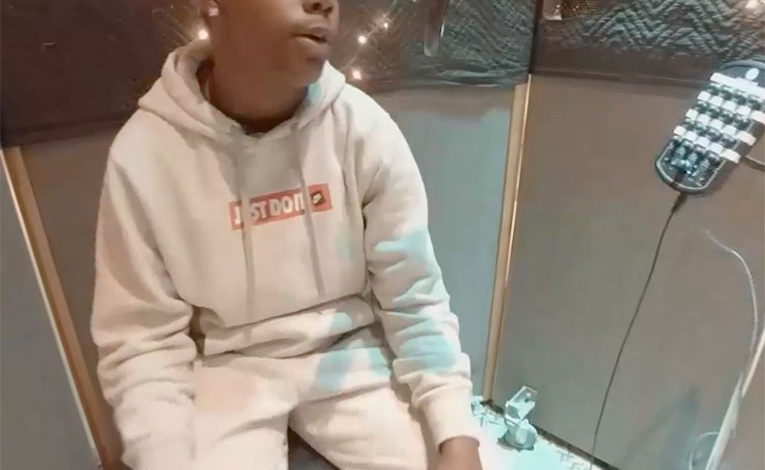
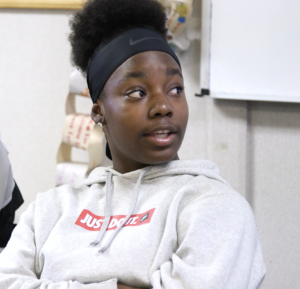
When Elizah was two years old, she moved from her home in Texas to Los Angeles, California. She remembers being with her twin brother Eli and the colorful balloons that welcomed them to their new home. Now, after fifteen years in the foster care system, Elizah is focusing her passions on music.

“When I rap, it gives me an opportunity to express myself and how I feel,” says Elizah, “I basically write my music like anytime I go outside […] my room, car, doesn’t really matter.”
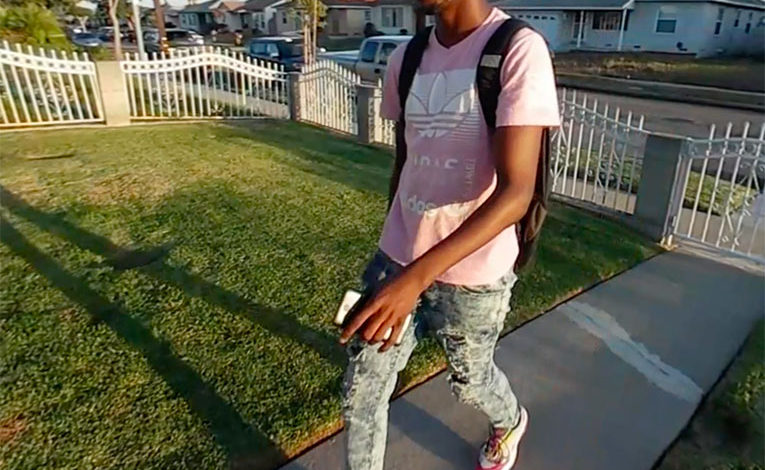

Although a person of very few words, Elizah’s lyrics tell a story of a young woman wanting to succeed in spite of hardships. “My pockets was empty of change, I really be out here making a change,” says one of her lines.

They also tell tales of teenage heartbreak, friendships and family. “This is my only way out, just tryna make mama proud, even though I haven’t seen her in a while.” Music is where she finds her voice.

Between school and home, Elizah often attends events hosted by Peace4Kids, a non-profit organization that provides programs and services for youth in foster care. Elizah has been part of the Peace4Kids community ever since she could remember. There, she can be seen dribbling a basketball, mingling with friends and occasionally tending to the whims of younger kids.

Through Peace4Kids, Elizah is able to take a few steps closer to her dream of becoming a rapper. In conjunction with Future Youth Records, a non-profit record label with an aim to help youth, Elizah is set to produce her own EP next year.

“I’m very very excited to put my music out,” she says, “I just want people to know they can follow their dreams.”

Read More →

Issac: Superhero Father Figures

Our Stories

By Connor Ling and Julia Nash

Issac St. Romain III says his full name every chance he gets, and when you hear him say it, it’s clear that he has earned every part of it.

After losing his father at the age of 16 to illness, the only constant source of guidance and support for Issac was suddenly gone. For a teenage boy, the loss of a father-figure was rattling, but he trekked forward and moved into his older sister’s apartment. After some time, he entered into the foster care system, a brand new experience that he made the most of.

Issac genuinely enjoyed the time spent with the other boys, playing video games, making raps, and goofing around in their common room. When he learned that a potential foster father was interested in taking him in, he was nervous since he had finally been settling into this new life.

He had heard that this foster father, Nate Gray, was hesitant to bring in another youth in foster care since he was already taking care of others, but Nate ended up bringing in Issac and forging a strong father-like relationship within the next couple of years.

Issac has always been obsessed with superheroes, even to this day. He can talk for hours about their backstories, recount each of their villains, and reminisce over their greatest triumphs because he resonates with their stories as they mirror his own. He loves the names they take on to be larger than life, to be more than what they were told they could be.

Both of his father figures were superheroes to him in each of their own ways; one raising him through his youth and the other helping him become a man.

Too often, Issac is typecast as the one who falls through the cracks, unsupported by the system and often forgotten about. Being so close to already aging out of the system when they enter, one might wonder how much of an impact foster care could have on someone like Issac. However, every experience in the foster care system is different. For Issac, entering the system in his junior year of high school gave him a more nuanced perspective and the opportunity to build a mentor-mentee relationship with Nate.

He has since aged out of the system, but Issac maintains his relationship with Nate. The VR video piece above brings viewers along the journey, as Issac revisits his old house to spend time with his foster father. The two recount their experiences together and discuss the ways in which Issac has grown as an individual. Issac claims that much of this growth is thanks to Nate’s guidance and patience, even when he was being a difficult teenager.

Issac says his full name because of the personal history it carries with it. It represents his father and his legacy, which he feels he has the responsibility to continue. But it also reminds him that he is not alone and that while he is no longer in the system, that community will always be there for him. Almost like a superhero, saying his name makes him stronger.

Read More →

Jenny: From Living to Working Within the System

Our Stories

By Clarke Lowry and Karen Wang

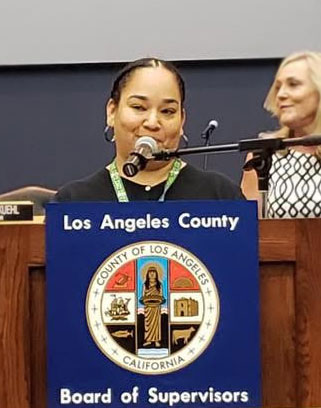
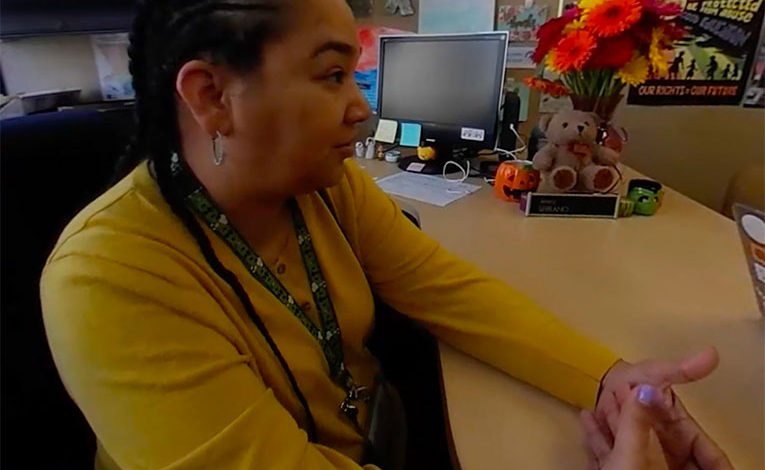
When Jenny Serrano aged out of the Los Angeles County foster care in September 1994, she was 18, alone and “subsequently homeless.” There was no transitional housing available for youth exiting foster care.

“After I left care, I just kind of couch-surfed and spent a couple of months where I was literally just on all night buses, riding all night to keep safe and to be warm,” Jenny said.

She participated in a local program and shared a temporary house with a dozen people on the USC’s fraternity row for six months, before she made enough money to afford her own home.

Having spent six years in the foster care system, Jenny was devoted to serve and advocate for changes to the child welfare system in California. After graduating from California State University Northridge with a Master’s degree in Public Administration, she has worked in different public sectors, including the local city, state, nonprofits and federal government.

Now, as a mother of two kids, she is working for the Los Angeles County Department of Children and Family Services, overseeing programs for transition-age youth.

Jenny used her background and experience to make an impactful change in the system, even in designing her own positions.

“A lot of the positions I took were because people knew me and they knew what I could do, and they created those positions for me,” she said. “Sometimes, creating things that you didn’t even know were possible – that’s how I got here.”

Jenny has found her home, but she is still working tirelessly for the wellbeing of other families and children.

“No matter how long I’m working here, no matter how much money I get paid, no matter what my title is, that at the end of the day, we’re here because families are distressed, because families are experiencing crisis, and because children’s safety and well being has either been threatened, or is being threatened,” she said. “So we need to be always mindful of the work that we’re doing. And at the same time, be very hopeful and hold that hope for all of the kids that we work with.”

“Someone, I think, somewhere in the universe held that hope for me,” she said.

Read More →